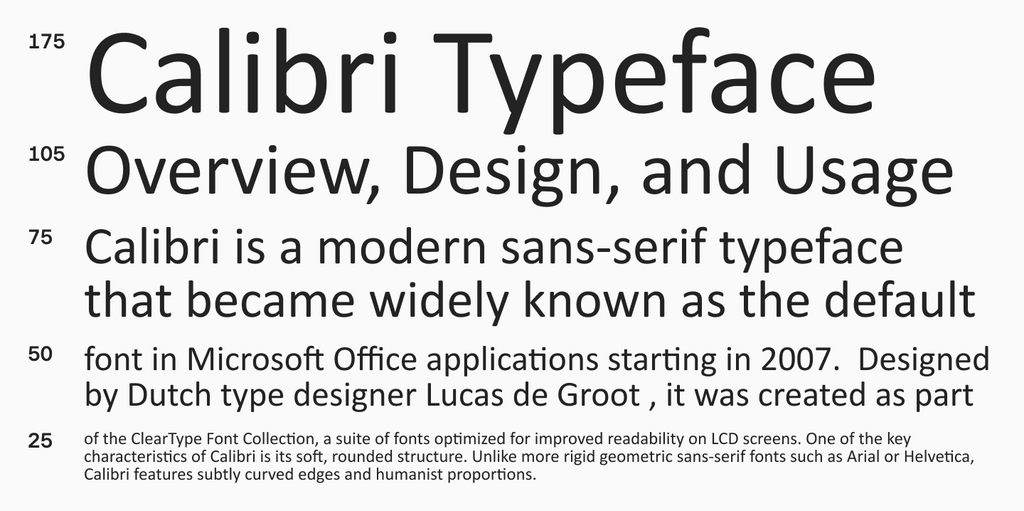

2026
Vom Mut zur Hoffnung
2026
From Courage to Hope
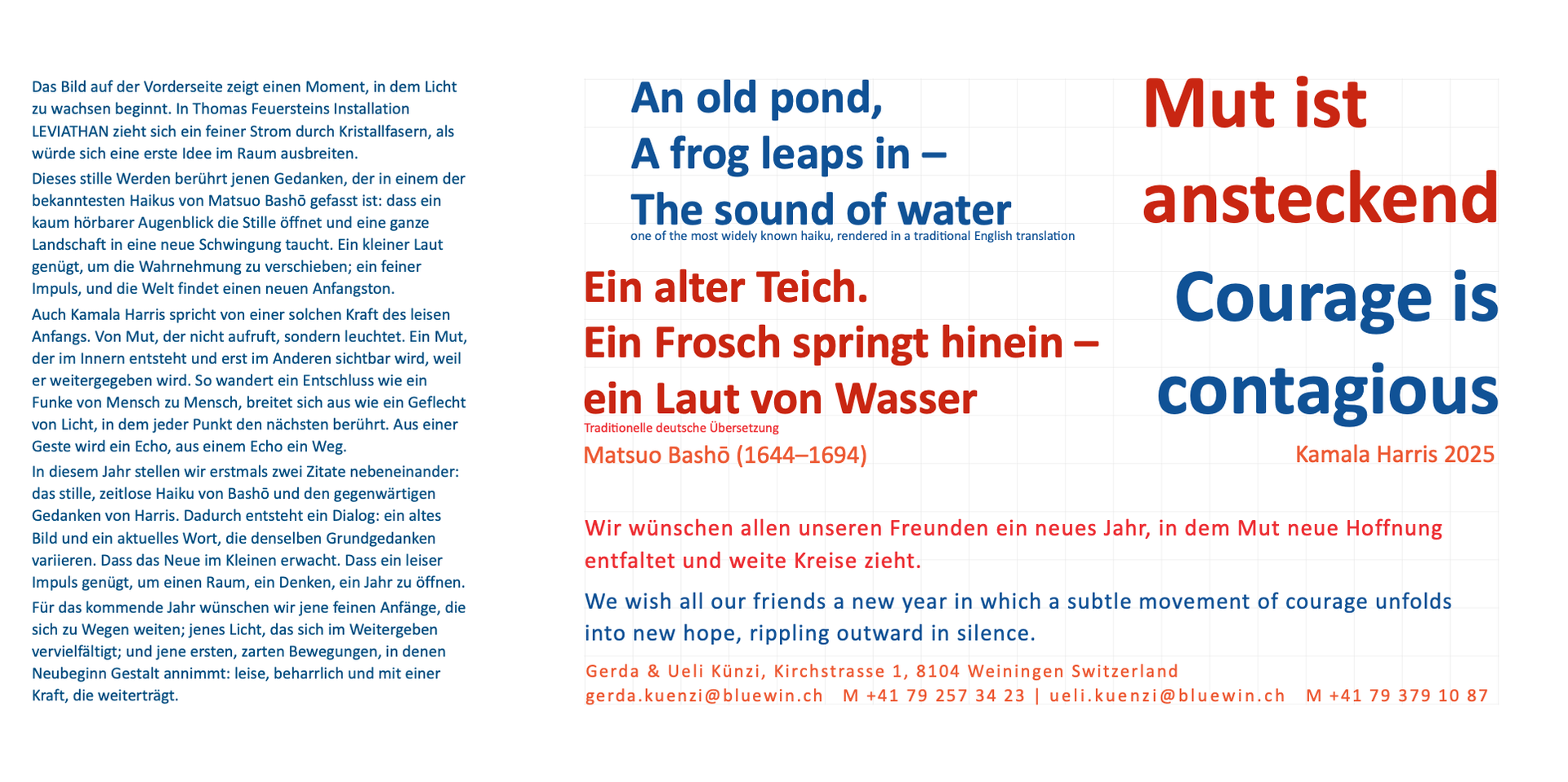
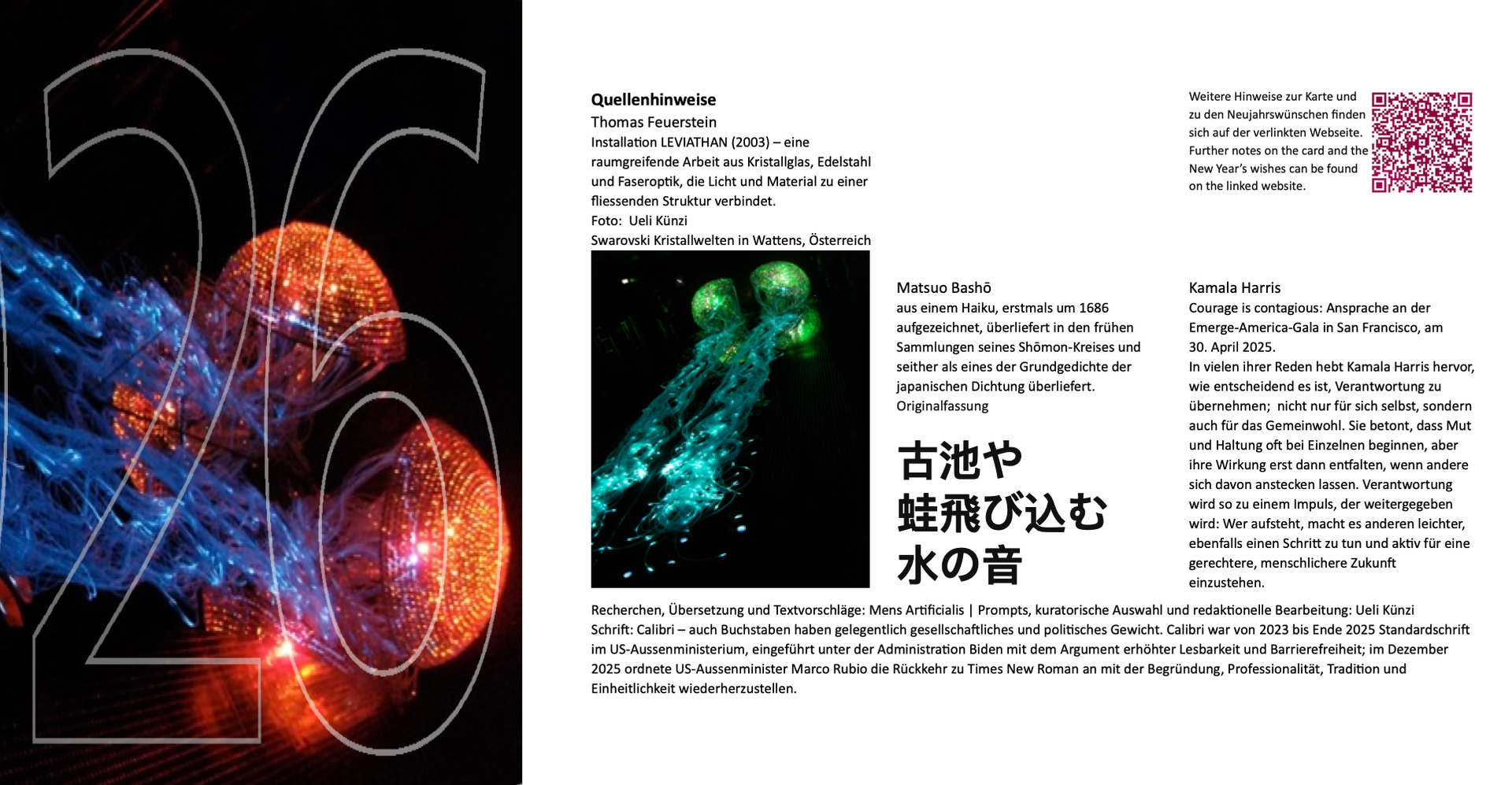
Für die Neujahrskarte 2026 haben wir erstmals Bild und zwei Zitate gemeinsam als thematischen Rahmen eingesetzt. Ausgangspunkt ist eine Lichtinstallation von Thomas Feuerstein, die feine Impulse sichtbar macht und den visuellen Ton der Karte setzt.
Dem Bild sind zwei Texte gegenübergestellt: ein Haiku von Matsuo Bashō, das mit minimalen Mitteln eine Verschiebung der Wahrnehmung beschreibt, und ein zeitgenössischer Gedanke von Kamala Harris, der Mut als etwas versteht, das weitergegeben wird.
Der Text der Karte verbindet diese Elemente zu einem Neujahrsgruss, der weniger eine feste Botschaft formuliert als eine Haltung andeutet: dass Neues oft leise beginnt und seine Wirkung im Weitertragen entfaltet.
For the 2026 New Year’s card, we brought together image and text in a new way. A photographic detail from a light installation by Thomas Feuerstein forms the visual starting point and sets the overall tone of the card.
The image is accompanied by two quotations: a haiku by Matsuo Bashō, in which a subtle moment shifts perception, and a contemporary statement by Kamala Harris that understands courage as something that emerges quietly and gains strength by being passed on.
The card text draws these elements together into a New Year’s message that does not present a fixed conclusion, but rather suggests an attitude: that change often begins in small, almost unnoticed impulses, and unfolds through connection.
MUT IST ANSTECKEND
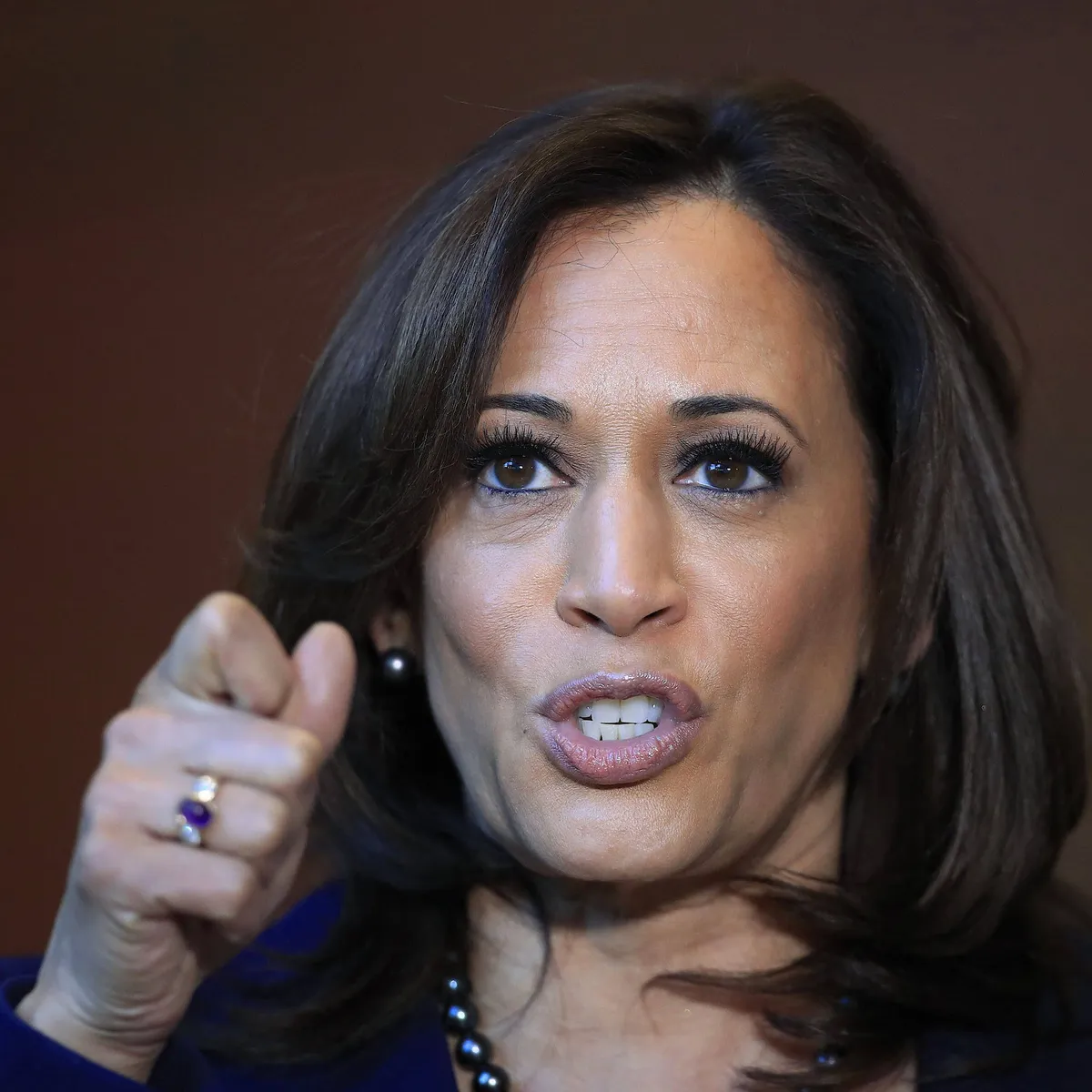
Der in der Neujahrskarte 2026 verwendete Satz von Kamala Harris stammt aus einer Rede vom 30. April 2025. In dieser Ansprache beschreibt sie Mut nicht als demonstrative Handlung, sondern als innere Haltung, die ihre Wirkung erst durch Weitergabe entfaltet. Dieser Gedanke bildet den zeitgenössischen Bezugspunkt der Karte und steht bewusst neben dem klassischen Haiku von Matsuo Bashō.
Quelle:
The Guardian, Kamala Harris attacks Trump in first major speech since leaving office, 30. April 2025
https://www.theguardian.com/us-news/2025/apr/30/kamala-harris-speech-trump
COURAGE IS CONTAGIUS
The sentence used on the 2026 New Year’s card by Kamala Harris originates from a speech delivered on April 30, 2025. In this address, she frames courage not as a demonstrative act, but as an inner stance whose impact unfolds through being passed on. This contemporary perspective forms the present-day reference of the card and is intentionally placed alongside the classical haiku by Matsuo Bashō.
Source:
The Guardian, Kamala Harris attacks Trump in first major speech since leaving office, April 30, 2025
https://www.theguardian.com/us-news/2025/apr/30/kamala-harris-speech-trump
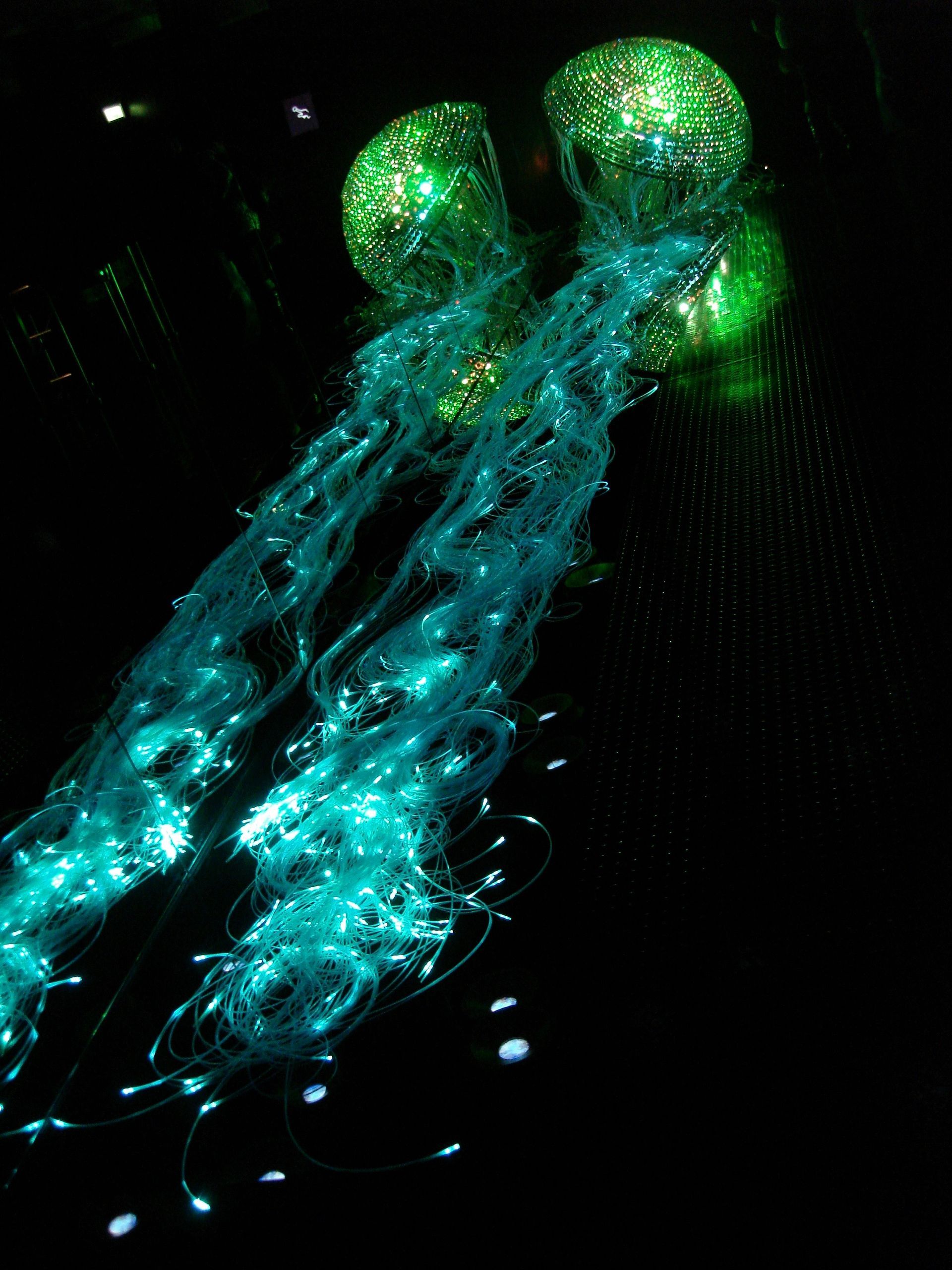
LEVIATHAN
Die Installation LEVIATHAN des Tiroler Künstlers Thomas Feuerstein wurde 2003 aus Kristallglas, Edelstahl und Lichtfasern geschaffen. Die Arbeit bezieht sich thematisch auf das biblische Seeungeheuer «Leviathan» und hat eine Anspielung auf das gleichnamige Werk von Thomas Hobbes (1651), in dem Gesellschaft als Netzwerk gedacht wird.
https://www.thomasfeuerstein.net/50_WORKS/50_SCULPTURES/89_LEVITHAN
LEVIATHAN
The installation LEVIATHAN by Tyrolean artist Thomas Feuerstein was created in 2003 using crystal glass, stainless steel and fiber-optic light. The work takes its title from the biblical sea monster «Leviathan» and alludes to the political-philosophical treatise of the same name by Thomas Hobbes (1651), in which society is conceived as a network of interdependent relationships.
https://www.thomasfeuerstein.net/50_WORKS/50_SCULPTURES/89_LEVITHAN
Matsuo Bashō
Matsuo Bashō (1644–1694) gilt als eine der zentralen Figuren der japanischen Haiku-Dichtung. Seine Texte zeichnen sich durch äusserste sprachliche Reduktion aus und beschreiben oft einen unscheinbaren Moment, der Wahrnehmung und Bedeutung verschiebt. Bashōs Haikus verbinden Naturbeobachtung mit innerer Haltung und entfalten ihre Wirkung weniger durch Erklärung als durch Andeutung.
https://de.wikipedia.org/wiki/Matsuo_Bashō
https://de.wikipedia.org/wiki/Haiku
Matsuo Bashō
Matsuo Bashō (1644–1694) is regarded as one of the central figures of Japanese haiku poetry. His texts are marked by extreme linguistic reduction and often focus on an inconspicuous moment that subtly shifts perception and meaning. Bashō’s haiku combine close observation of nature with an inner stance, unfolding their effect through suggestion rather than explanation.
https://en.wikipedia.org/wiki/Matsuo_Bash%C5%8D
https://en.wikipedia.org/wiki/Haiku